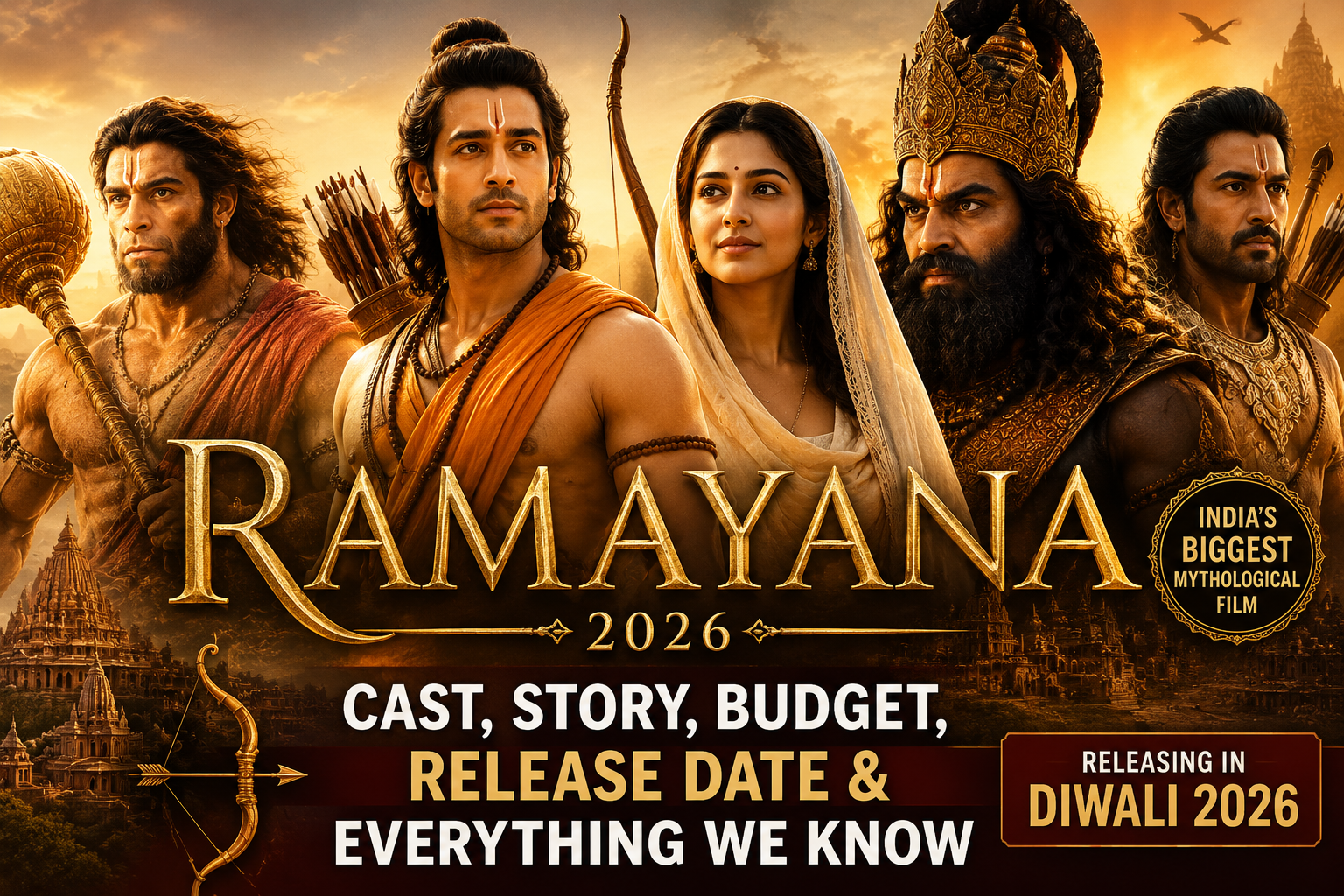
Ramayana (2026): Cast, Story, Budget, Release Date & Everything We Know
Introduction
Few Indian films have generated as much excitement as Ramayana (2026). Inspired by one of India’s greatest epics, this ambitious adaptation aims to bring the timeless story of Lord Rama, Sita, Hanuman, and Ravana to audiences on a scale never seen before. With a star-studded cast, world-class visual effects, an internationally acclaimed creative team, and one of the biggest production budgets in Indian cinema, Ramayana (2026) is already being called one of the most anticipated films of the decade.
This Ramayana (2026) guide covers everything currently known about the film, including its cast, story, budget, release date, production details, visual effects, music, filming locations, and the latest official updates. Whether you’re a fan of Indian mythology, Bollywood, or epic fantasy cinema, this article brings together all the important information in one place.
Unlike previous adaptations, Ramayana (2026) is planned as a two-part cinematic event. The filmmakers aim to present the legendary story with emotional depth, cutting-edge technology, and breathtaking visuals while remaining respectful to the original epic.
One of the biggest reasons behind the excitement is the impressive cast. Ranbir Kapoor takes on the role of Lord Rama, Sai Pallavi portrays Sita, Yash appears as Ravana, Sunny Deol plays Hanuman, and Ravie Dubey steps into the role of Lakshmana. Their performances, combined with large-scale production design and advanced VFX, have raised expectations among audiences worldwide.
Another highlight is the music. The film brings together legendary composer A. R. Rahman and internationally renowned composer Hans Zimmer, making it one of the most exciting musical collaborations in Indian cinema.
As official announcements continue to emerge, Ramayana (2026) has become one of the most searched upcoming Indian movies. Fans eagerly await new posters, teasers, trailers, and behind-the-scenes updates.
This guide explores every confirmed detail and explains why Ramayana (2026) has the potential to become one of the biggest mythological films ever made.
What Is Ramayana (2026)?
Ramayana (2026) is an upcoming Indian mythological epic directed by Nitesh Tiwari and produced by Namit Malhotra. Inspired by the ancient Sanskrit epic attributed to Maharishi Valmiki, the film aims to retell the story of Lord Rama using modern filmmaking techniques while preserving the spiritual and cultural importance of the original narrative.
The project has been in development for several years and is designed as an international-scale production. Instead of adapting the entire epic into a single movie, the creators have divided the story into two parts, allowing greater attention to character development, emotional storytelling, and spectacular action sequences.
The filmmakers have collaborated with leading visual effects artists and international production teams to recreate ancient kingdoms, forests, battles, and mythical creatures with remarkable realism. This approach reflects the ambition to produce a film that can stand alongside the world’s biggest fantasy epics.
Unlike many earlier adaptations, Ramayana (2026) focuses on cinematic realism while respecting the religious significance of its characters. Every costume, weapon, palace, and environment has reportedly been carefully researched to create an authentic yet visually stunning interpretation of the epic.
The story follows Prince Rama of Ayodhya, whose life changes after his exile to the forest with his wife Sita and brother Lakshmana. Their peaceful journey eventually leads to a confrontation with Ravana, the mighty king of Lanka, resulting in one of the greatest battles ever described in Indian mythology.
Beyond its action and adventure, Ramayana (2026) explores timeless themes such as righteousness (dharma), sacrifice, devotion, loyalty, courage, and the triumph of good over evil. These universal values continue to make the Ramayana one of the world’s most influential literary works.
The film’s combination of mythology, emotional storytelling, grand visuals, and an outstanding cast has made Ramayana (2026) one of the most anticipated Indian films in recent history.
Ramayana (2026) Cast
One of the biggest reasons behind the enormous excitement surrounding Ramayana (2026) is its star-studded cast. The filmmakers have carefully selected some of India’s most respected actors to portray the legendary characters from the epic. Each casting announcement has generated significant discussion among fans, making Ramayana (2026) one of the most talked-about upcoming Indian films.
Rather than relying only on visual spectacle, the film focuses on bringing emotional depth and authenticity to every character. The combination of experienced performers, world-class production values, and a legendary story has raised expectations to an entirely new level.
Ranbir Kapoor as Lord Rama
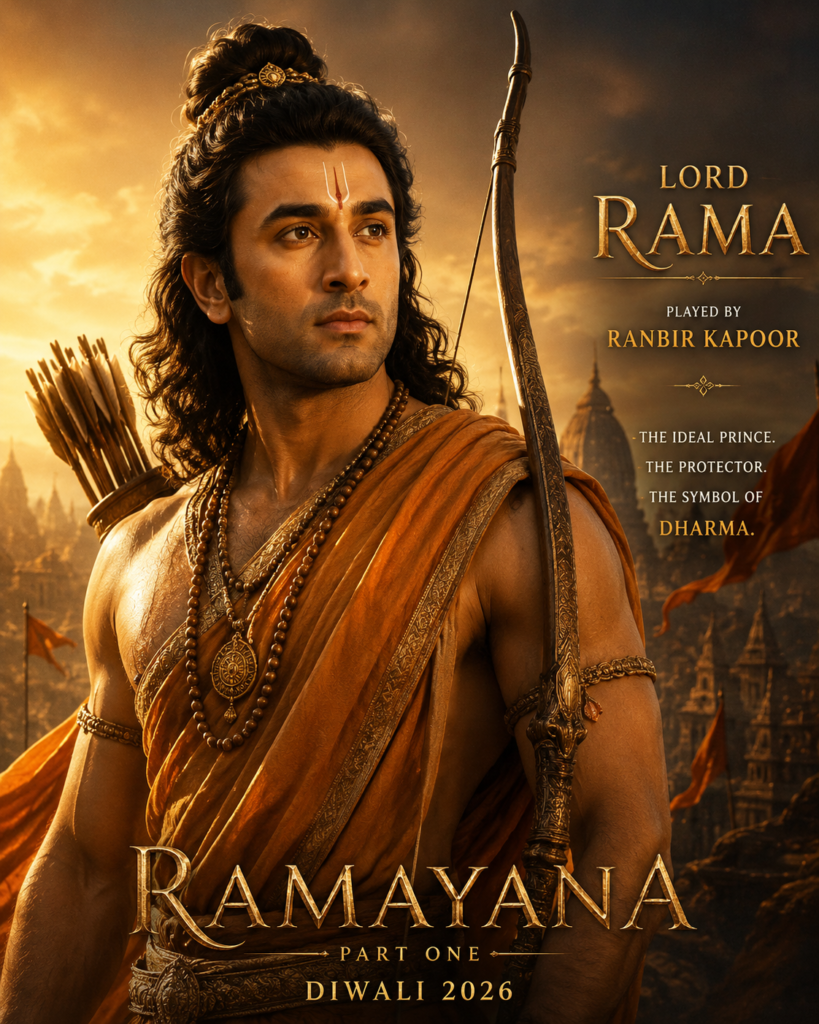
Ranbir Kapoor plays Lord Rama, the noble prince of Ayodhya and the central hero of Ramayana (2026). Rama represents righteousness, compassion, courage, humility, and unwavering devotion to dharma.
Preparing for such an iconic role required extensive physical training, disciplined preparation, and a deep understanding of the character’s spiritual significance. Fans are eager to see how Ranbir Kapoor portrays one of India’s most respected mythological figures on the big screen.
His calm personality, emotional acting skills, and screen presence make him one of the most anticipated aspects of Ramayana (2026).
Sai Pallavi as Sita

Sai Pallavi portrays Sita, one of the most admired female characters in Indian mythology.
Sita symbolizes purity, strength, patience, wisdom, and unwavering faith. Throughout the epic, she demonstrates remarkable courage while facing extraordinary challenges.
Sai Pallavi is widely appreciated for her natural acting and graceful screen presence, making many fans believe she is an excellent choice for the role. Her performance is expected to add emotional depth and authenticity to Ramayana (2026).
Yash as Ravana
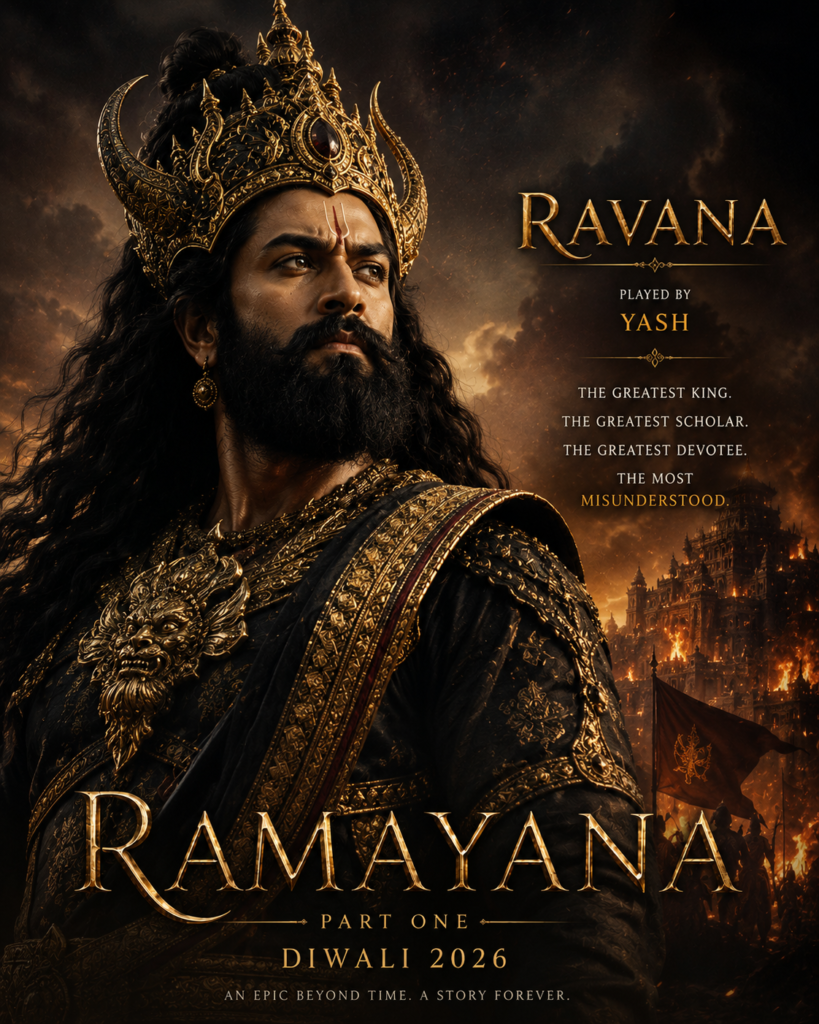
Kannada superstar Yash takes on the challenging role of Ravana, the powerful King of Lanka.
Although remembered as the primary antagonist of the Ramayana, Ravana is also portrayed as an extraordinary scholar, brilliant strategist, accomplished musician, and devoted follower of Lord Shiva.
This complexity makes him one of Indian mythology’s most fascinating characters.
Yash’s commanding screen presence, powerful dialogue delivery, and intense performances have made his casting one of the biggest highlights of Ramayana (2026).
Sunny Deol as Hanuman
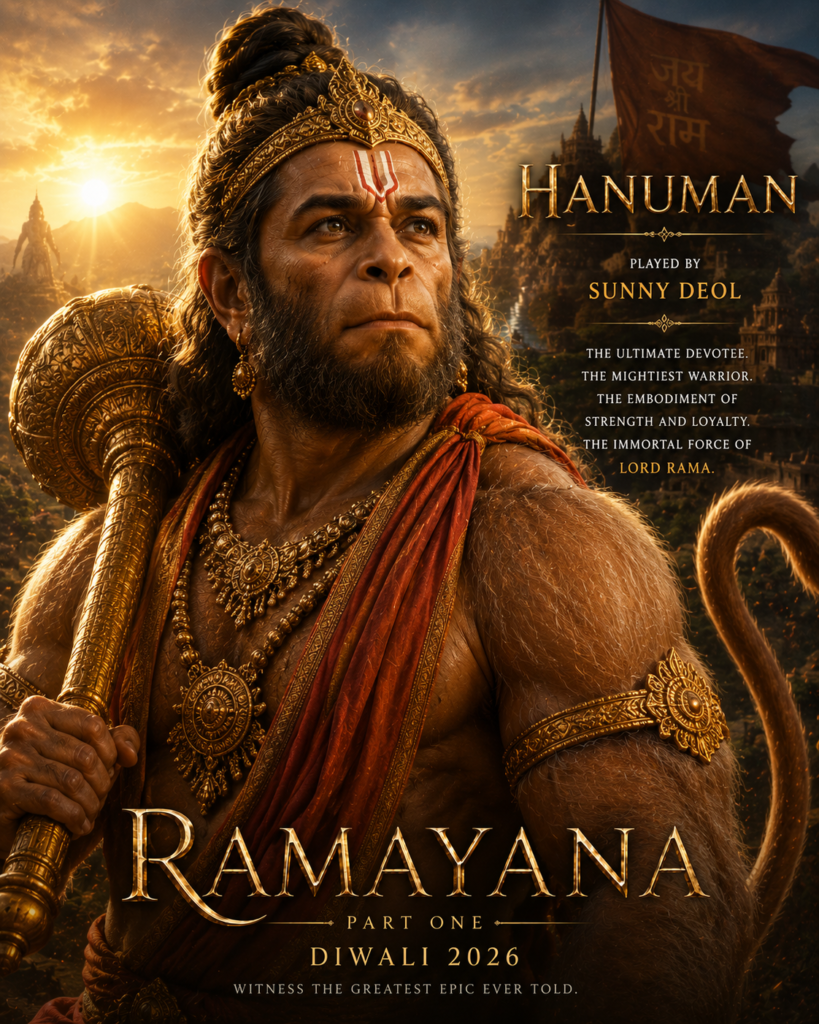
Sunny Deol portrays Lord Hanuman, the devoted disciple of Lord Rama.
Hanuman symbolizes loyalty, devotion, humility, courage, wisdom, and limitless strength. His role becomes increasingly important as the story progresses toward the battle against Lanka.
Known for his powerful performances and energetic screen presence, Sunny Deol is expected to bring both emotional depth and heroic intensity to Hanuman’s character in Ramayana (2026).
Ravie Dubey as Lakshmana
Television actor Ravie Dubey steps into the role of Lakshmana, Lord Rama’s younger brother.
Lakshmana is known for his unwavering loyalty, bravery, discipline, and willingness to sacrifice everything for his elder brother.
His relationship with Rama forms one of the emotional pillars of the Ramayana. Fans are excited to see Ravie Dubey portray this beloved character with sincerity and dedication in Ramayana (2026).
Supporting Cast
Apart from the lead actors, Ramayana (2026) is expected to feature several accomplished performers portraying important mythological characters such as King Dasharatha, Kaikeyi, Bharata, Shatrughna, Vibhishana, Sugriva, Angada, Jambavan, Indrajit, Kumbhakarna, Mandodari, and many others.
As official announcements continue, the supporting cast of Ramayana (2026) is expected to become one of the strongest ensembles ever assembled for an Indian mythological film.
Complete Character Profiles
One of the biggest strengths of Ramayana (2026) is its legendary cast portraying some of the most respected characters in Indian mythology. Each character carries immense cultural, spiritual, and emotional significance. Unlike ordinary action films, Ramayana (2026) revolves around personalities whose values continue to inspire millions of people across the world.
The filmmakers have stated that special attention has been given to costumes, dialogue, physical appearance, and character development to ensure that every role remains faithful to the spirit of the Ramayana while appealing to modern audiences.
Lord Rama – The Ideal King
Lord Rama is the central hero of Ramayana (2026) and represents righteousness, compassion, courage, truth, discipline, and selfless leadership.
Born as the eldest son of King Dasharatha of Ayodhya, Rama is admired for always placing duty before personal happiness. Even when he is about to become king, he willingly accepts fourteen years of exile to fulfill his father’s promise.
Throughout Ramayana (2026), viewers witness Rama’s remarkable patience, wisdom, and unwavering commitment to dharma. Rather than seeking revenge or personal glory, he consistently chooses justice, forgiveness, and responsibility.
His leadership inspires loyalty among everyone around him, including Lakshmana, Hanuman, Sugriva, and the Vanara army.
Ranbir Kapoor’s portrayal of Rama is expected to balance emotional depth with heroic strength, presenting one of Indian mythology’s most admired figures in a realistic yet respectful manner.
Sita – The Symbol of Grace and Strength
Sita is far more than the heroine of Ramayana (2026).
She represents courage, devotion, resilience, kindness, and inner strength.
Although often remembered for her patience during difficult times, Sita consistently demonstrates extraordinary determination and dignity throughout the epic.
Her unwavering trust in Rama, combined with her own moral strength, makes her one of the most respected female characters in Indian literature.
Sai Pallavi’s natural acting style and expressive performances have made many fans excited to see her interpretation of Sita.
Rather than portraying Sita as helpless, Ramayana (2026) is expected to emphasize her intelligence, compassion, and emotional resilience.
Lakshmana – The Brother Who Never Left Rama’s Side
Lakshmana plays one of the most important supporting roles in Ramayana (2026).
As Rama’s younger brother, he willingly leaves behind royal comfort to accompany Rama and Sita during their fourteen-year exile.
His loyalty never wavers.
Lakshmana protects his family from danger, fights fearlessly against powerful enemies, and constantly places Rama’s safety above his own.
His dedication demonstrates the importance of family, sacrifice, and unconditional support.
Ravie Dubey’s performance is expected to highlight Lakshmana’s bravery while also showing his emotional bond with Rama and Sita.
Hanuman – The Greatest Devotee
Hanuman remains one of the most beloved characters in Ramayana (2026).
Known for his limitless strength, wisdom, humility, and devotion to Lord Rama, Hanuman becomes the turning point in the battle against Ravana.
Whether searching for Sita, crossing the ocean, carrying the Sanjeevani mountain, or leading warriors into battle, Hanuman repeatedly proves that true strength comes from faith and selfless service.
Sunny Deol’s commanding screen presence is expected to make Hanuman one of the most memorable characters in Ramayana (2026).
Rather than simply portraying physical power, the film also aims to showcase Hanuman’s kindness, intelligence, and unwavering loyalty.
Ravana – A Complex Antagonist
Among all mythological villains, Ravana remains one of the most fascinating.
In Ramayana (2026), Ravana is expected to be portrayed as far more than a traditional antagonist.
He is remembered as an extraordinary scholar, accomplished musician, fearless warrior, skilled administrator, and devoted follower of Lord Shiva.
However, his pride, arrogance, and desire for power ultimately lead to his downfall.
This complexity makes Ravana one of the most layered characters in Indian mythology.
Yash’s intense acting style makes him an ideal choice for bringing Ravana’s intelligence, authority, ambition, and emotional depth to the screen.
Unlike one-dimensional villains, Ravana represents how great knowledge without humility can lead to destruction.
Story (Spoiler-Free)
At its heart, Ramayana (2026) tells a timeless story about righteousness, sacrifice, love, courage, and the victory of good over evil.
The story begins in the prosperous kingdom of Ayodhya, where Prince Rama is admired for his wisdom, humility, and commitment to justice. Just before his coronation, unforeseen circumstances force him into exile for fourteen years.
Without hesitation, Rama accepts his father’s promise and chooses duty over personal ambition.
His wife Sita and younger brother Lakshmana voluntarily accompany him into the forest, beginning a journey filled with challenges, adventures, and life-changing encounters.
During their exile, they meet sages, protect innocent people from evil forces, and experience both moments of peace and dangerous conflicts.
The turning point arrives when Ravana, the mighty ruler of Lanka, abducts Sita.
Determined to rescue her, Rama forms an alliance with Hanuman and the Vanara army.
Together, they undertake one of the greatest rescue missions in mythology, leading to an epic confrontation between Rama’s forces and Ravana’s powerful kingdom.
While the story includes spectacular battles and breathtaking adventures, Ramayana (2026) is ultimately about moral values, family bonds, loyalty, devotion, and the importance of choosing righteousness even during the most difficult moments.
Its universal themes continue to inspire millions of people across generations, making Ramayana (2026) much more than an action film—it is a celebration of one of humanity’s greatest epics.
Director, Producers & Creative Team
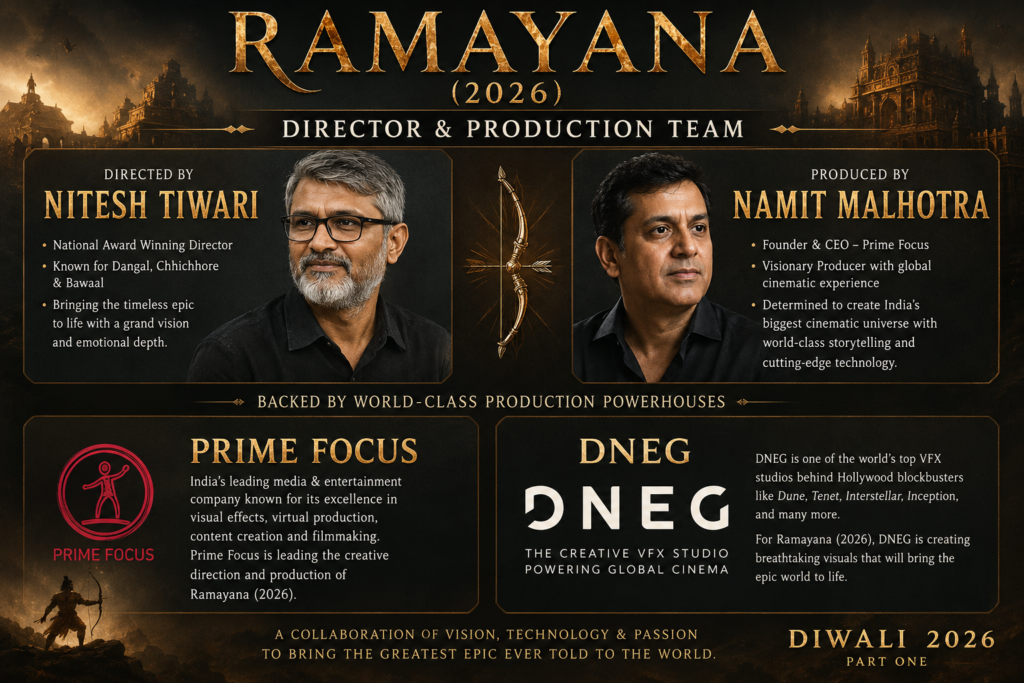
Behind every great film is a talented creative team, and Ramayana (2026) brings together some of the biggest names in Indian and international cinema. The makers aim to create a mythological epic that not only honors the original Ramayana but also delivers a world-class cinematic experience through advanced technology, powerful storytelling, and stunning visuals.
Nitesh Tiwari – Director
Ramayana (2026) is directed by Nitesh Tiwari, one of India’s most respected filmmakers. Known for directing critically acclaimed and commercially successful films, Tiwari has earned a reputation for balancing emotional storytelling with large-scale entertainment.
Directing Ramayana (2026) is considered one of the biggest challenges of his career because the film is based on one of India’s most sacred and beloved epics. Every scene must balance cinematic excellence with cultural authenticity.
According to the filmmakers, extensive research has been conducted to ensure that the story remains respectful while also appealing to modern audiences around the world.
Namit Malhotra – Producer
Producer Namit Malhotra is leading the ambitious vision behind Ramayana (2026).
As the founder of Prime Focus and DNEG, he has been associated with several internationally acclaimed visual effects projects. His experience in combining cutting-edge technology with filmmaking has made Ramayana (2026) one of the most technically ambitious Indian films ever produced.
The production team aims to create visuals that match the scale of the world’s biggest fantasy franchises while staying true to Indian mythology.
Music by A. R. Rahman and Hans Zimmer
One of the most exciting aspects of Ramayana (2026) is its music.
The film brings together Academy Award-winning composer A. R. Rahman and legendary Hollywood composer Hans Zimmer. Their collaboration has generated enormous excitement because both composers are known for creating unforgettable cinematic soundtracks.
Fans expect Ramayana (2026) to feature emotionally powerful background scores, grand orchestral themes, devotional melodies, and epic battle music that enhance every important moment of the story.
Visual Effects and Technical Excellence
Visual effects are expected to become one of the defining strengths of Ramayana (2026).
The filmmakers are using modern CGI, virtual production techniques, motion capture, and large-scale digital environments to recreate ancient kingdoms, forests, Lanka, massive battlefields, and mythological creatures.
Unlike older mythological adaptations that relied heavily on practical effects, Ramayana (2026) combines advanced filmmaking technology with realistic production design to create a visually immersive experience.
The goal is to present Indian mythology on a scale that can compete with the world’s biggest fantasy films while maintaining authenticity.
Budget and Production Scale
One of the biggest talking points surrounding Ramayana (2026) is its enormous production budget.
Industry reports suggest that the combined budget for both parts is among the highest ever allocated to an Indian film franchise. The massive investment reflects the filmmakers’ ambition to create an international-quality mythological epic.
A significant portion of the budget has reportedly been dedicated to:
High-end visual effects (VFX)
Large-scale battle sequences
Massive sets inspired by ancient India and Lanka
International production technology
Costume and weapon design
Advanced camera equipment
Action choreography
Music production
Post-production and CGI
Unlike conventional Bollywood productions, Ramayana (2026) is being planned as a long-term cinematic project rather than a single standalone film.
The makers have reportedly spent years developing the screenplay, designing costumes, researching mythology, building digital assets, and planning visual effects before principal photography even began.
This careful planning demonstrates the commitment to delivering a cinematic experience worthy of one of India’s greatest epics.
The production scale of Ramayana (2026) has often been compared with major international fantasy franchises because of its ambitious vision, technological innovation, and attention to detail.
For many movie lovers, Ramayana (2026) represents a new milestone in Indian filmmaking, showing how mythology can be brought to life using world-class production standards.
Filming Locations & Production Journey
The journey of Ramayana (2026) began long before the cameras started rolling. Bringing one of the world’s greatest epics to the big screen required years of planning, research, script development, concept art, costume design, and technical preparation. Every stage of production has been carefully planned to ensure the film captures both the grandeur and emotional depth of the original Ramayana.
Unlike a typical Bollywood production, Ramayana (2026) has been developed as a large-scale international project. The filmmakers have assembled a team of experienced artists, designers, visual effects specialists, and technicians from India and around the world. Their shared goal is to create a cinematic experience that matches the scale of the legendary story while respecting its cultural and spiritual importance.
Extensive Pre-Production
Before filming began, the creative team reportedly spent several years researching ancient Indian history, architecture, mythology, costumes, weapons, and royal traditions. Artists created hundreds of concept illustrations to visualize Ayodhya, the forests of exile, Kishkindha, and the magnificent kingdom of Lanka.
Every costume, ornament, weapon, and palace design was planned with great attention to detail so that Ramayana (2026) would feel authentic while still delivering spectacular cinematic visuals.
Building Massive Sets
Instead of depending entirely on computer-generated environments, Ramayana (2026) combines practical sets with advanced digital technology. Large palace interiors, royal courts, forest landscapes, temples, and battlefields have been designed to create realistic environments for the actors.
These enormous sets allow performers to interact naturally with their surroundings while giving the visual effects team a solid foundation for enhancing each scene.
Advanced Filming Technology
The production team is using modern filmmaking techniques, including high-resolution digital cameras, motion-control equipment, advanced lighting systems, and virtual production technology. These tools help capture highly detailed visuals while making it easier to create large-scale mythological environments during post-production.
The combination of practical filmmaking and cutting-edge technology reflects the ambition behind Ramayana (2026).
Visual Effects Integration
Visual effects play a crucial role throughout the film. Rather than using CGI only for action scenes, digital technology helps recreate ancient kingdoms, divine weapons, magical creatures, large armies, and breathtaking landscapes.
The collaboration with internationally recognized VFX studios aims to ensure that every sequence looks realistic, immersive, and visually spectacular.
A Long-Term Vision
Unlike many films that are completed within a short production schedule, Ramayana (2026) has been planned as a multi-year project. Because the story is divided into two parts, the filmmakers have focused on maintaining consistent visual quality, storytelling, and character development across both films.
This careful approach demonstrates the dedication of everyone involved in creating one of the most ambitious mythological films in Indian cinema.
The production journey of Ramayana (2026) reflects the enormous effort required to transform an ancient epic into a modern cinematic masterpiece. Every stage—from research and costume design to filming and visual effects—shows the filmmakers’ commitment to delivering an unforgettable experience for audiences worldwide.
Visual Effects & Technology Behind Ramayana (2026)
One of the biggest reasons Ramayana (2026) has captured the attention of movie lovers is its ambitious use of modern filmmaking technology. The filmmakers are not simply retelling an ancient epic—they are attempting to present it on a global cinematic scale with world-class visual effects, realistic environments, and breathtaking action sequences.
Creating the world of Ramayana (2026) requires far more than traditional filmmaking. Ancient kingdoms like Ayodhya and Lanka, magical weapons, divine powers, flying chariots, and massive battlefields must all be recreated with extraordinary realism. To achieve this, the production team is combining practical filmmaking techniques with cutting-edge CGI and advanced post-production technology.
World-Class VFX Studios
One of the biggest strengths of Ramayana (2026) is the involvement of internationally recognized visual effects studios. Companies such as DNEG and Prime Focus have contributed to some of the world’s most successful Hollywood films, earning multiple Academy Awards for their outstanding visual effects work.
Their expertise gives fans confidence that Ramayana (2026) will deliver visuals that meet international standards while remaining faithful to Indian mythology.
Recreating Ancient India
Many of the kingdoms, forests, mountains, and cities described in the Ramayana no longer exist in their original form. The visual effects team must therefore build these locations digitally while ensuring they remain believable and historically inspired.
Every palace, temple, battlefield, and landscape is carefully designed using concept art, historical research, and modern computer graphics. This allows Ramayana (2026) to present a world that feels both authentic and cinematic.
Epic Battle Sequences
The Ramayana features some of the greatest battles in Indian mythology, and Ramayana (2026) aims to recreate them on an unprecedented scale.
Thousands of digital warriors, detailed battlefields, mythical creatures, divine weapons, and large-scale action scenes require months of planning and visual effects work. Each sequence must combine realistic choreography with spectacular cinematic storytelling.
Motion Capture and Digital Effects
Modern filmmaking technology allows actors’ performances to be enhanced through motion capture and advanced CGI. This helps create lifelike creatures, dynamic action sequences, and realistic fantasy elements while preserving the emotions of the actors.
Using these techniques, Ramayana (2026) can faithfully portray legendary moments from the epic without sacrificing realism.
A New Benchmark for Indian Cinema
If the visual effects meet expectations, Ramayana (2026) could establish a new benchmark for Indian mythological films. The combination of international technology, experienced artists, and a legendary story has the potential to redefine how Indian epics are presented on the big screen.
For many fans, the visual scale of Ramayana (2026) is one of the biggest reasons they are eagerly waiting for its release. It represents not only a celebration of Indian mythology but also a major step forward in the evolution of Indian filmmaking.
Release Date
Among all the questions surrounding Ramayana (2026), the release date is one of the most searched by movie fans. Since the project was officially announced, excitement has continued to grow as the filmmakers gradually reveal new updates.
Ramayana (2026) is planned as a two-part cinematic saga, allowing the filmmakers to tell the complete story without rushing important events. This approach gives enough time to develop the characters, relationships, and epic battles that define the Ramayana.
According to the official announcement, Ramayana Part One is scheduled to release during Diwali 2026, while Part Two is planned for Diwali 2027.
Choosing the Diwali festival for the release is considered meaningful because it celebrates the return of Lord Rama to Ayodhya after defeating Ravana, making it one of the most appropriate occasions for the film’s release.
As production continues, fans eagerly await teaser trailers, character posters, and promotional events leading up to the release of Ramayana (2026).
Trailer & Latest Updates
Although excitement for Ramayana (2026) continues to grow, the filmmakers have carefully limited the amount of promotional material released so far.
Instead of revealing major story details early, the production team has focused on officially introducing the project through announcements, first-look posters, and cast confirmations.
Fans are especially looking forward to the first official trailer, which is expected to showcase:
The magnificent kingdom of Ayodhya
The forests during Rama’s exile
Ravana’s golden kingdom of Lanka
Hanuman’s heroic moments
Large-scale battle sequences
Advanced visual effects
The emotional relationship between Rama and Sita
The trailer is also expected to introduce the overall visual style of Ramayana (2026) and demonstrate how the filmmakers have combined mythology with modern cinematic technology.
As more official updates become available, this section of Ramayana (2026) will continue to be updated with the latest announcements regarding teasers, trailers, songs, promotional events, and behind-the-scenes footage.
Why Ramayana (2026) Could Become India’s Biggest Movie
There are many reasons why industry experts believe Ramayana (2026) has the potential to become one of the biggest Indian films ever made.
Unprecedented Scale
The filmmakers are creating Ramayana (2026) on a scale rarely seen in Indian cinema. Massive sets, advanced CGI, international production teams, and years of planning demonstrate the project’s enormous ambition.
Legendary Story
Unlike fictional stories, the Ramayana has inspired generations for thousands of years. Its timeless themes of righteousness, sacrifice, devotion, courage, and family continue to resonate with audiences across the world.
Powerful Cast
With actors like Ranbir Kapoor, Sai Pallavi, Yash, Sunny Deol, and Ravie Dubey, Ramayana (2026) features one of the strongest casts assembled for an Indian mythological film.
World-Class Music
The collaboration between A. R. Rahman and Hans Zimmer has generated tremendous excitement among movie lovers. Their combined musical talent is expected to create one of the most memorable soundtracks in Indian cinema.
International Visual Effects
Using cutting-edge visual effects technology, Ramayana (2026) aims to recreate ancient kingdoms, legendary battles, and mythological characters with breathtaking realism.
Global Appeal
While deeply rooted in Indian culture, the themes of love, sacrifice, loyalty, justice, and hope are universal. This gives Ramayana (2026) the potential to attract audiences far beyond India.
Together, these factors explain why Ramayana (2026) is already considered one of the most anticipated mythological films ever produced.
Interesting Facts About Ramayana (2026)
One of the reasons Ramayana (2026) has become one of the most talked-about Indian films is the number of remarkable achievements associated with its production. From its ambitious vision to its international creative team, the film continues to make headlines long before its release. Here are some fascinating facts that make Ramayana (2026) one of the biggest cinematic projects in Indian history.
1. A Two-Part Epic
Unlike many previous adaptations, Ramayana (2026) is being produced as a two-part film series. This allows the filmmakers to tell the complete story without rushing important events or character development.
2. One of India’s Biggest Budgets
Ramayana (2026) is among the most expensive Indian films ever produced. The massive investment reflects the filmmakers’ commitment to creating world-class visuals, detailed production design, and unforgettable action sequences.
3. International Music Collaboration
One of the most exciting aspects of Ramayana (2026) is the collaboration between legendary Indian composer A. R. Rahman and Academy Award-winning composer Hans Zimmer. Their combined experience promises a memorable soundtrack that blends Indian musical traditions with grand orchestral themes.
4. Advanced Visual Effects
The film uses cutting-edge CGI, motion capture, virtual production, and digital environments to recreate ancient kingdoms, forests, battles, and mythological creatures. This technology aims to present the Ramayana on a scale rarely seen in Indian cinema.
5. A Star-Studded Cast
With Ranbir Kapoor as Lord Rama, Sai Pallavi as Sita, Yash as Ravana, Sunny Deol as Hanuman, and Ravie Dubey as Lakshmana, Ramayana (2026) features one of the strongest casts assembled for a mythological film.
6. Years of Planning
The production team reportedly spent years researching mythology, historical architecture, costumes, weapons, and royal traditions before filming began. This careful preparation reflects the importance of preserving the authenticity of the epic.
7. Global Expectations
Although rooted in Indian culture, Ramayana (2026) is expected to attract audiences worldwide because its themes of courage, sacrifice, family, justice, and hope are universal.
8. Respect for the Original Epic
The filmmakers have repeatedly emphasized that Ramayana (2026) is being developed with great respect for the spiritual and cultural significance of the Ramayana. Extensive research has been carried out to ensure that the adaptation remains faithful while using modern cinematic storytelling.
9. A New Era for Indian Mythological Films
Many industry experts believe Ramayana (2026) could redefine how mythological stories are presented on the big screen. If successful, it may inspire more large-scale adaptations of Indian epics using world-class filmmaking technology.
10. One of the Most Anticipated Films of the Decade
Long before its release, Ramayana (2026) has generated enormous excitement through official announcements, first-look reveals, and casting updates. Millions of movie lovers are eagerly waiting to experience this ambitious retelling of one of history’s greatest epics.
Why Ramayana (2026) Matters for Indian Cinema
Beyond being one of the most anticipated films of the decade, Ramayana (2026) represents an important milestone for the Indian film industry. It is not only an adaptation of one of the country’s greatest epics but also a project that showcases how Indian cinema is evolving through advanced technology, international collaborations, and ambitious storytelling.
For many years, filmmakers have dreamed of bringing the Ramayana to the big screen with the scale it truly deserves. Modern visual effects, virtual production techniques, and world-class sound design now make it possible to recreate ancient kingdoms, legendary battles, and divine moments with breathtaking realism. Ramayana (2026) aims to use these technologies while preserving the emotional and spiritual essence of the original epic.
Another significant aspect of Ramayana (2026) is its ability to introduce the timeless story of Lord Rama to younger generations. Many young viewers may know the Ramayana through books, television serials, or family traditions, but this film offers an opportunity to experience the epic in a modern cinematic format. By combining spectacular visuals with meaningful storytelling, the movie can inspire new audiences to learn more about India’s rich cultural heritage.
The film also demonstrates the growing confidence of Indian cinema on the global stage. With internationally recognized visual effects studios, a collaboration between legendary composers A. R. Rahman and Hans Zimmer, and one of the most ambitious production teams ever assembled, Ramayana (2026) has the potential to attract viewers far beyond India.
If the film succeeds both critically and commercially, it could encourage more filmmakers to adapt Indian mythology, history, and classical literature with similar care and production quality. This would open exciting opportunities for future generations of storytellers while allowing Indian culture to reach an even wider international audience.
For these reasons, Ramayana (2026) is more than just a movie. It is a landmark project that celebrates storytelling, tradition, innovation, and the enduring values of the Ramayana. As audiences count down to its release, expectations continue to grow, making Ramayana (2026) one of the most significant cinematic events in recent Indian film history.
Frequently Asked Questions (FAQs)
1. What is Ramayana (2026) about?
Ramayana (2026) is a two-part mythological film based on the ancient Indian epic, following Lord Rama’s journey from exile to his battle against Ravana.
2. Who plays Lord Rama in Ramayana (2026)?
Ranbir Kapoor portrays Lord Rama.
3. Who plays Sita?
Sai Pallavi plays Sita.
4. Who plays Ravana?
Kannada superstar Yash portrays Ravana.
5. Who plays Hanuman?
Sunny Deol takes on the role of Hanuman.
6. Who is directing Ramayana (2026)?
The film is directed by Nitesh Tiwari.
7. When will Ramayana (2026) release?
Part One is officially scheduled for Diwali 2026, while Part Two is planned for Diwali 2027.
8. Why is Ramayana (2026) so highly anticipated?
Its legendary story, world-class cast, massive budget, advanced visual effects, international music collaboration, and grand production scale have made Ramayana (2026) one of the most awaited Indian films.
Conclusion
Ramayana (2026) is much more than a movie—it is an ambitious attempt to bring one of the world’s greatest epics to modern audiences using cutting-edge filmmaking techniques while respecting its cultural and spiritual significance. With an outstanding cast, visionary director, international production standards, breathtaking visual effects, and the timeless story of Lord Rama, the film has all the ingredients to become a landmark in Indian cinema.
As more official announcements, trailers, and promotional material are released, excitement surrounding Ramayana (2026) will continue to grow. Whether you’re interested in the cast, story, budget, release date, or production updates, Ramayana (2026) is undoubtedly one of the biggest films to watch in the coming years.
If you enjoy reading about upcoming Indian films, don’t miss our detailed guide on Top 10 Most Anticipated Indian Movies of 2026 https://itshk.in/top-10-most-anticipated-indian-movies-of-2026/. It features Ramayana (2026) alongside other highly awaited releases, including their cast, release dates, stories, and production updates. Exploring both articles will help you stay updated on the biggest Indian movies set to release in 2026.
For the latest official announcements, cast updates, trailers, and production news about Ramayana (2026), visit the https://worldoframayanamovie.com/. It regularly shares verified information about the film, including the creative team, release plans, and other official updates as they are announced.