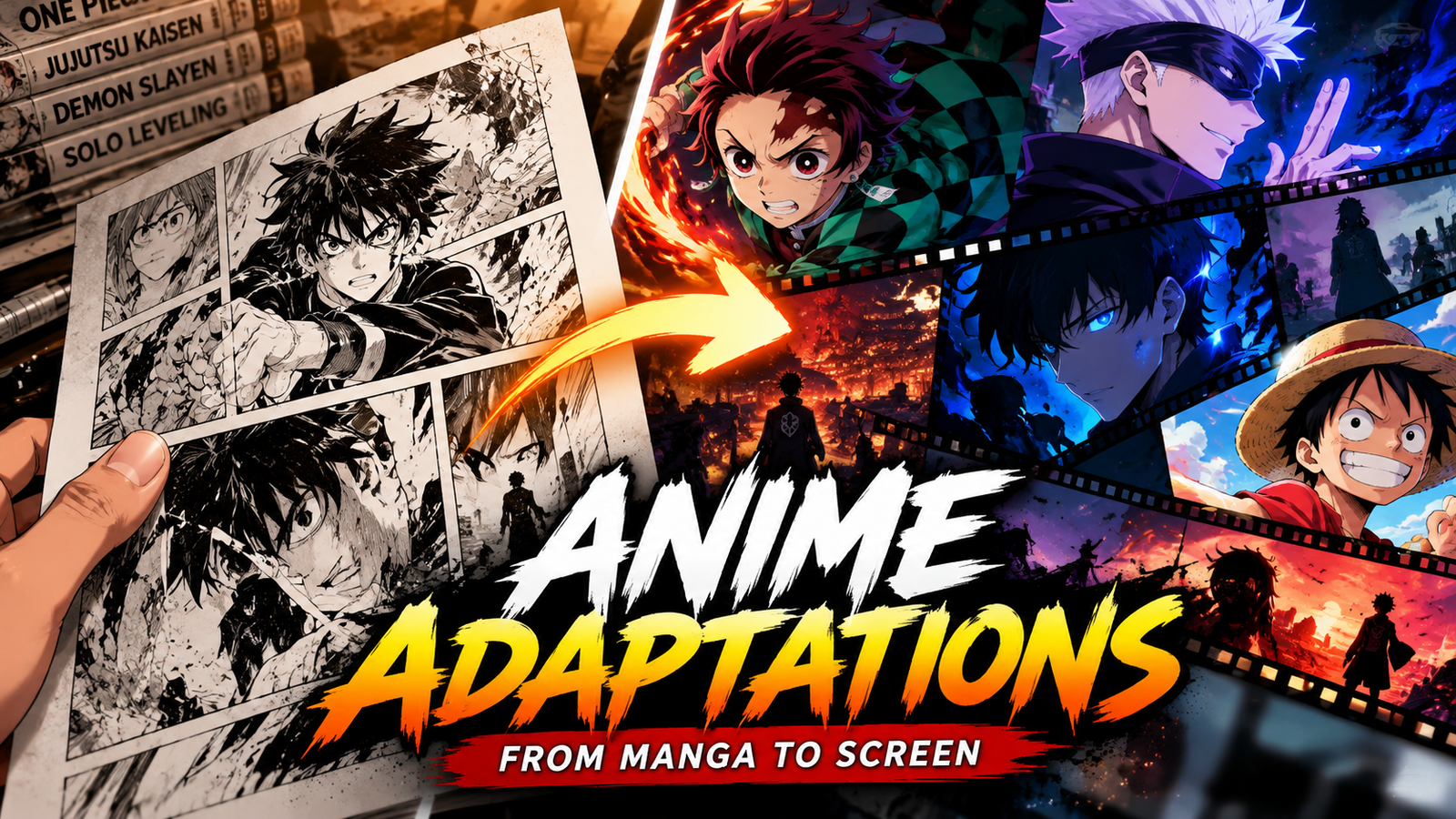
From Manga to Anime: Why High-Stakes Adaptations Are Taking Bigger Creative Risks
Anime Adaptations Are Entering a New Era
For years, turning a popular manga or light novel into an anime seemed like a straightforward formula: find a successful story, bring its characters to the screen and stay close to the source material.
But anime adaptations are becoming more ambitious.
Studios are experimenting with visual styles, pacing, storytelling techniques and even genre combinations that can make an adaptation feel different from its original material while still respecting what fans loved about it.
This is especially noticeable with high-stakes stories. Dark fantasy, action-heavy shonen and emotionally complex manga can require enormous creative decisions when they move from printed panels to animation.
anime based on manga https://www.netflix.com/tudum/anime?utm_source=chatgpt.com
The challenge is simple: how much should an anime adaptation change?
Stay too close to the source, and the anime may struggle to take advantage of animation as a medium. Change too much, and longtime fans may feel that the original story has lost its identity.
That balance is becoming one of the most interesting discussions surrounding modern anime adaptations.
As anime reaches larger international audiences and streaming platforms invest in bigger productions, studios have more opportunities to experiment. The result could be a new generation of anime adaptations where creative freedom becomes just as important as staying faithful to the original story. Netflix’s growing anime lineuphttps://about.netflix.com/en/news/anime-japan-2026?utm_source=chatgpt.com
Why Studios Are Taking Bigger Risks
The anime industry has changed significantly as streaming platforms have made Japanese animation available to audiences around the world. With international viewers following new releases almost immediately, studios have more opportunities to experiment with ambitious productions.
For anime adaptations, this creates both an opportunity and a challenge. A successful manga may already have a large fanbase, but the anime still needs to offer something that works specifically as animation.
Solo Leveling Season 3https://itshk.in/solo-leveling-anime-complete-guide/
Animation Can Add Something the Manga Cannot
Manga relies on panels, artwork and the reader’s imagination. Animation adds movement, sound, voice acting, music, lighting and timing.
Because of this, anime adaptations don’t always need to reproduce every panel exactly. A director may extend a fight scene, change the pacing of a conversation or use original visual techniques to make a moment more powerful on screen.
Animation Can Add Something the Manga Cannot
Creative freedom has limits, especially when adapting a beloved manga.
Major changes to characters, story events or the tone can create criticism from existing fans. On the other hand, copying the source material without adapting it properly can make an anime feel visually static or poorly paced.
That is why successful anime adaptations often have to find a middle ground: preserve the identity of the original work while taking advantage of everything animation can offer.
As competition between major studios and streaming platforms increases, that balance could become even more important.
The Challenge of Adapting Dark Fantasy
Dark fantasy is one of the most demanding genres for anime adaptations because its appeal often comes from atmosphere as much as the story itself.
A manga can create tension through detailed artwork, panel composition and moments of silence. An anime has to recreate that feeling through animation, music, sound design, voice acting and camera movement.
Keeping the Atmosphere
For a dark fantasy adaptation, simply animating the events of the manga may not be enough. The studio has to capture the mood that made the original story memorable.
Dark environments, disturbing creatures, intense battles and emotionally difficult scenes can all require different visual approaches.
Balancing Action and Story
Another challenge is pacing. A major fight might occupy only a few manga chapters, while an anime episode needs to maintain a specific rhythm.
Good anime adaptations have to decide where to slow down, where to expand a scene and where to move quickly without making the story feel rushed.
Why Creative Freedom Matters
This is where creative decisions can make a major difference. Directors and animation teams may add movement, background details or original transitions that were impossible to show in the original manga.
The goal isn’t necessarily to change the story. Instead, the strongest anime adaptations can use animation to make the same story feel alive in a completely different way.
Why Shonen Adaptations Are So Difficult
Shonen manga often combines fast-paced battles, long character arcs, comedy, emotional moments and complicated power systems. Bringing all of those elements together makes anime adaptations particularly challenging.
The Pressure of Iconic Moments
Fans already have their favorite scenes in their heads before an adaptation is released. A major fight, character entrance or emotional reveal can become one of the most discussed moments of a season.
That creates enormous pressure for the animation team. A scene that looks incredible on a manga page may need completely different direction, timing and choreography to have the same impact in animation.
Pacing Can Make or Break a Series
Long-running shonen stories also create a pacing problem. Moving too quickly can remove important character development, while moving too slowly can make viewers lose interest.
Modern anime adaptations therefore have to carefully decide which chapters deserve more screen time and which parts can be condensed.
More Than Just Bigger Battles
Another important factor is character development. Spectacular animation can attract viewers, but emotional connections often determine whether they continue watching.
The most memorable anime adaptations usually understand that action is only one part of the experience. The characters, relationships and consequences of their choices are what give those battles meaning.
When Creative Changes Actually Work
Not every change from the original manga is automatically a bad thing. In some anime adaptations, carefully chosen changes can make scenes more effective on screen while keeping the heart of the original story intact.
A manga panel has a fixed composition, but animation allows directors to control movement, timing and perspective. A short scene can be expanded with additional character reactions, environmental details or choreography without changing its overall purpose.
best anime adaptations https://itshk.in/best-anime-adaptations-better-than-manga/
Staying Faithful to the Spirit
The most important question isn’t always whether every frame matches the manga. It is whether the adaptation understands why the original scene mattered.
A character’s personality, an important relationship or the emotional meaning of a major event should remain recognizable even when the presentation changes.
Adding Without Overwriting
Original scenes can also give anime adaptations opportunities to explore moments that were brief in the source material. Extra dialogue, transitions or action can make a sequence feel more complete.
The risk comes when additions begin changing the characters or story rather than supporting them.
That’s why creative freedom works best when it serves the original vision instead of replacing it. For anime adaptations, the goal isn’t perfect duplication—it is creating a version that feels authentic while taking advantage of animation as its own medium.
The Rise of Genre-Blending Anime
Modern anime adaptations are not always limited to a single genre. Stories can combine action with romance, horror with comedy, or dark fantasy with mystery, creating experiences that are difficult to describe with one label.
This can be especially interesting when a manga already mixes several genres. Animation gives studios more ways to emphasize those different sides through music, color, pacing and visual direction.
Why Genre-Blending Works
A serious story can use comedy to give viewers a break from intense scenes. A romance can introduce action to raise the stakes. A fantasy series can use mystery to keep viewers guessing.
For anime adaptations, these combinations can create a distinctive identity instead of making the series feel like a standard example of one genre.
The Challenge for Studios
The difficulty is maintaining balance. If one element becomes too dominant, the adaptation can lose the tone that made the original manga interesting.
That makes creative direction especially important. When different genres complement each other instead of competing for attention, anime adaptations can reach audiences beyond the fans of the original manga.
As studios continue experimenting with different storytelling styles, genre-blending could become an increasingly important part of the future of anime adaptations.
Live-Action vs Animated Adaptations
The conversation around anime adaptations isn’t limited to animation anymore. Popular manga and anime properties are increasingly being explored through live-action films and series, creating a completely different set of challenges.
Animation Has More Freedom
Animation can reproduce exaggerated character designs, unusual environments and impossible action sequences without the physical limitations of live-action production.
For anime adaptations, this makes it easier to preserve visual elements that might be extremely expensive or difficult to recreate with real actors and sets.
Live-Action Requires a Different Approach
Live-action adaptations have to translate those same ideas into physical performances, costumes, locations, visual effects and practical production.
Trying to copy an animated character’s appearance exactly can sometimes look unnatural. A successful live-action version may therefore need to reinterpret certain visual elements while keeping the character recognizable.
Two Different Ways to Adapt a Story
Neither format automatically guarantees a better adaptation. They simply provide different creative tools.
The challenge for anime adaptations and live-action projects alike is understanding what should remain unchanged and what can be redesigned for the new medium.
As major streaming platforms continue investing in adaptations, this distinction will become increasingly important for creators and audiences alike.
What Fans Expect From Major Adaptations
For anime adaptations, fan expectations can be just as important as the production itself. Readers often spend years imagining how their favorite characters, battles and emotional moments will look when animated.
Faithfulness Still Matters
Fans usually want the adaptation to respect the original story, characters and world-building. This doesn’t necessarily mean every manga panel has to be copied exactly.
What matters is preserving the elements that define the original work.
Animation Quality Matters Too
At the same time, audiences increasingly expect major anime adaptations to take advantage of modern animation technology.
Fluid action, detailed backgrounds, expressive characters and strong sound design can transform a familiar manga scene into something completely new.
The Internet Changes Everything
Social media also means that reactions can spread almost instantly. A single trailer, character design or fight scene can generate huge discussions before an entire season even releases.
That puts additional pressure on studios, but it also gives anime adaptations an opportunity to reach audiences far beyond the original manga’s fanbase.
Ultimately, viewers want an adaptation that feels both familiar and fresh—something that respects the source while giving them a reason to experience the story again.
What the Future of Anime Adaptations Could Look Like
The future of anime adaptations could become less about choosing between “faithful” and “original” and more about finding the right balance between the two.
Studios now have access to increasingly sophisticated animation technology, larger international audiences and streaming platforms that can support stories that might once have been considered difficult to adapt.
More Freedom for Creators
Future adaptations could give directors and animation teams greater freedom to reinterpret scenes while keeping the core story intact.
That could mean expanded fight sequences, new visual techniques, additional character moments or creative changes that take advantage of animation.
More Ambitious Productions
As demand for anime continues to grow globally, major adaptations could receive larger production budgets and longer development periods. This could allow studios to spend more time on complex animation and detailed storytelling.
However, bigger budgets alone won’t guarantee quality. Strong direction, writing and a clear understanding of the source material will remain essential.
The most interesting anime adaptations of the future may therefore be the ones that don’t simply copy the manga. They could respect the original vision while using animation to create something that feels new, ambitious and worth watching even for people who already know the story.
FAQs About Anime Adaptations
What makes a good anime adaptation?
A good adaptation usually balances respect for the original manga with creative decisions that take advantage of animation. Strong storytelling, direction, character development and production quality all contribute.
Should anime adaptations follow the manga exactly?
Not necessarily. A completely panel-for-panel approach isn’t always the best way to translate a story into animation. Thoughtful changes can work when they preserve the original characters, themes and story.
Why are dark fantasy adaptations difficult?
Dark fantasy often depends heavily on atmosphere, detailed artwork and complex world-building. Anime adaptations have to recreate those elements through animation, sound, music and pacing.
Why do fans criticize changes in adaptations?
Fans may have a strong connection to the original manga. Changes to important characters, events or the overall tone can therefore feel very different from what they expected.
Can live-action adaptations work for manga?
Yes. Live-action can work when creators understand what needs to be preserved and what needs to be redesigned for real actors, locations and visual effects.
Will anime adaptations become more ambitious?
As anime reaches larger global audiences and production technology continues to develop, studios have more opportunities to create ambitious anime adaptations with distinctive visual styles and storytelling approaches.
Final Word
Whether it’s a dark fantasy epic or a deeply emotional slice-of-life story, the future of anime adaptations depends on giving creators enough freedom to make the most of animation while still respecting the original work.
The strongest adaptations don’t have to copy every panel. They need to understand the characters, themes and moments that made the source material special—and then find a creative way to bring those elements to life.
As studios experiment with visual styles, genre combinations and new storytelling techniques, anime adaptations could become even more ambitious in the years ahead.
Which manga or light novel do you think deserves a high-budget, completely faithful anime adaptation next? Let me know your top choice in the comments below!