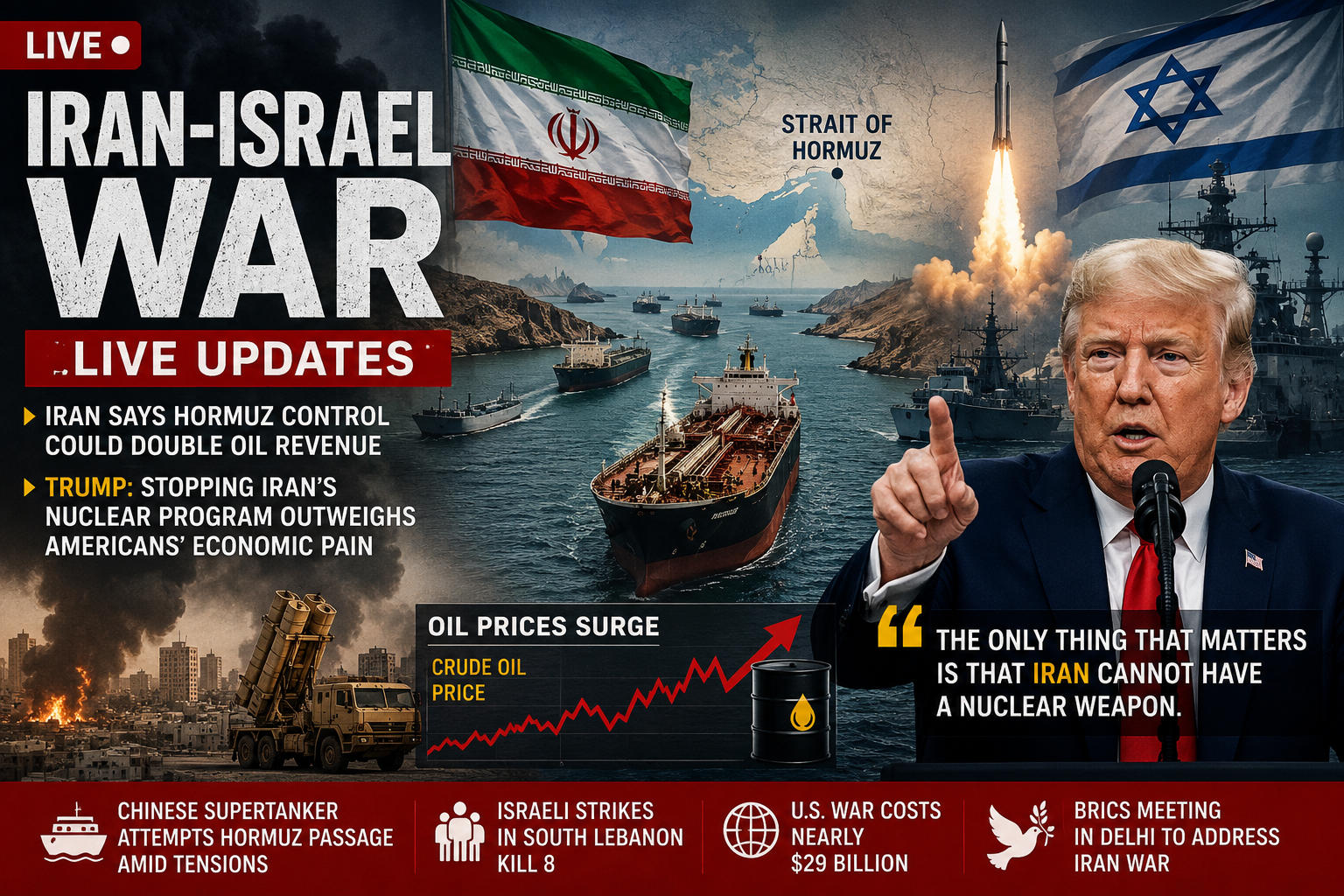
Iran-Israel War LIVE Updates
The Iran-Israel conflict continued to escalate on May 13, 2026, with major developments involving the Strait of Hormuz, Donald Trump, oil prices, Israel-Lebanon strikes, and global diplomatic tensions.
Iran Says Strait of Hormuz Control Could Boost Oil Revenue Amid Escalating Conflict
The Iran-Israel conflict continued to intensify on Wednesday, with Iran’s military claiming that its control over the strategically important Strait of Hormuz could significantly strengthen the country’s economy and global influence.
Iranian military spokesperson Mohammad Akraminia stated that Tehran’s oversight of the Strait of Hormuz may potentially double the nation’s oil income. According to him, the western side of the strait is managed by Iran’s Revolutionary Guards naval forces, while the eastern section remains under the control of the Iranian navy.
The Strait of Hormuz remains one of the world’s most critical oil transit routes, carrying a major share of global crude exports. Any disruption in the region has the potential to affect oil prices, shipping operations, and international trade markets worldwide.
Trump Says Iran Nuclear Threat Is Top Priority
U.S. President Donald Trump said preventing Iran from obtaining a nuclear weapon remains his main concern, even if Americans continue to face financial pressure caused by the ongoing war.
Speaking before departing for China, Trump stated that economic struggles faced by citizens would not influence his decisions regarding negotiations with Iran.
“The only thing that matters is that Iran cannot have a nuclear weapon,” Trump said while addressing reporters.
The Pentagon also confirmed that the total U.S. cost linked to the Iran conflict has now reached nearly $29 billion, increasing scrutiny over America’s military involvement and economic impact.
Rising Global Concerns Over Oil Supply
The International Energy Agency warned that the ongoing conflict could reduce global oil supply by nearly 3.9 million barrels per day during 2026. Analysts believe the situation may worsen fuel inflation and create instability across energy markets.
Reports also showed that a Chinese supertanker carrying Iraqi crude attempted passage through the Strait of Hormuz despite rising tensions. Several Gulf nations remain concerned that the conflict could disrupt maritime trade routes further.
Meanwhile, Italy announced plans to move warships closer to the Gulf region, while Gulf countries urged Iran not to use the Strait of Hormuz as geopolitical pressure against neighboring nations.
Violence Continues Across the Region
Israeli strikes continued in southern Lebanon, where drone attacks reportedly killed several civilians, including children, according to Lebanese health authorities. Israel stated that the attacks targeted Hezbollah infrastructure.
Iran also executed another individual accused of spying for Israel, marking the sixth such execution since the conflict began earlier this year.
At the same time, Iranian authorities temporarily released prominent human rights lawyer Nasrin Sotoudeh on bail following international attention surrounding her arrest.
India and BRICS Diplomacy in Focus
Iranian Deputy Foreign Minister Kazem Gharibabadi welcomed possible peace efforts from India and said Tehran supports diplomatic initiatives aimed at reducing tensions in West Asia.
The Iran war is expected to dominate discussions during the upcoming BRICS Foreign Ministers meeting in New Delhi, where member countries are reportedly struggling to reach a unified position on the conflict.
Prime Minister Narendra Modi is also expected to meet Iranian Foreign Minister Abbas Araghchi during the summit.